A clear, easy guide to protecting your natural Saltillo terracotta pavers
Clay Imports pavers are handmade from 100% natural clay in Saltillo, Mexico. Because they’re unglazed, they have a beautifully raw, textured surface with natural variation. They’re durable, high-traction, and full of character.
Sealing your terracotta pavers protects the surface from moisture, staining, and installation materials, while still allowing them to develop a soft, natural patina over time.
Below, you’ll find everything you need to know about sealing natural clay pavers, whether you’re tackling the project yourself or working with a professional installer.

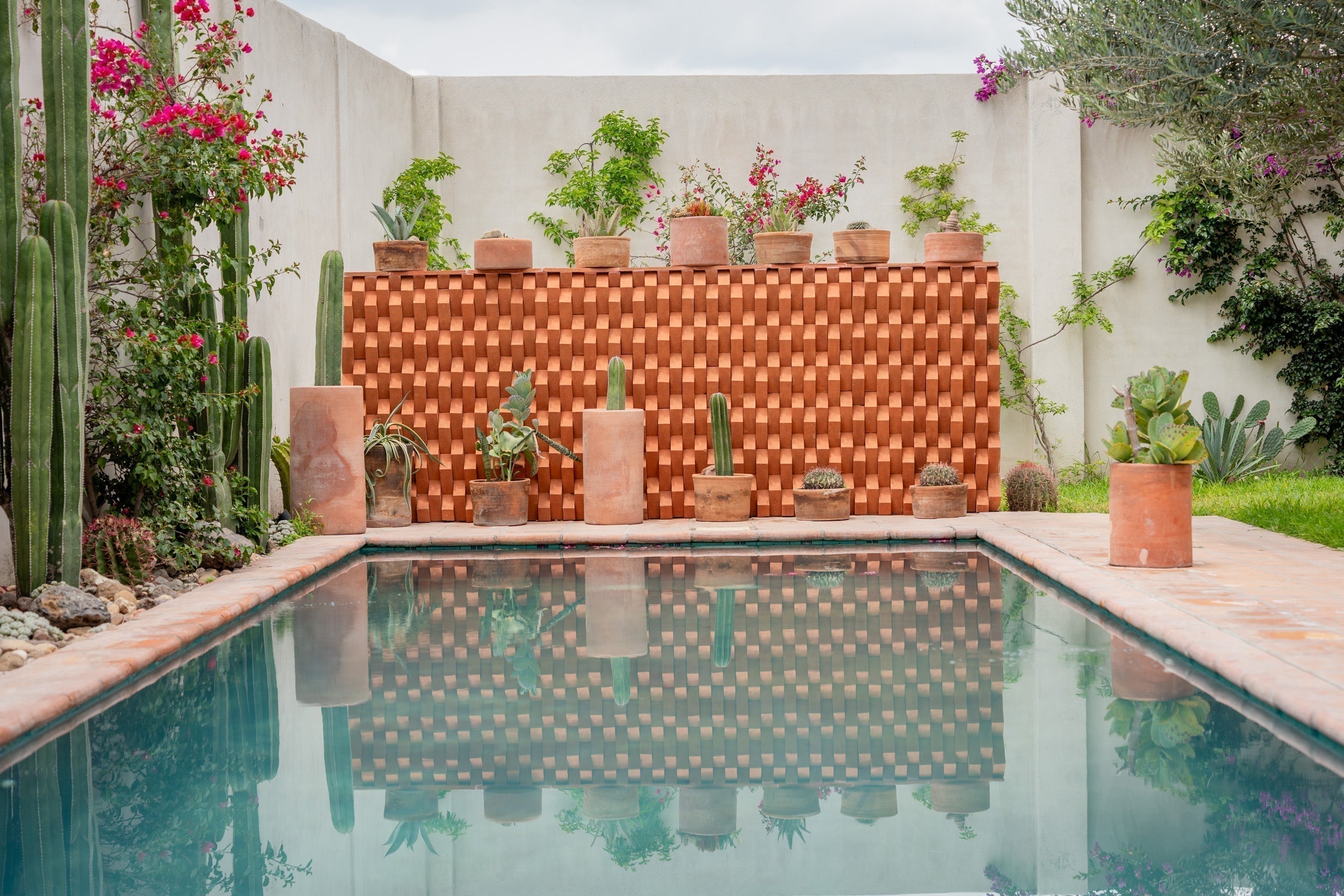
Outdoor patio with terracotta pavers in a single basketweave layout at Motel in Marfa. Design by Motel.
- What You’ll Need
- Why You Should Seal Natural Clay Pavers
- Before You Begin: Prep & Cleaning Checklist
- Ideal Conditions for Sealing Terracotta Pavers
- When to Seal Pavers
- Application Tips to Prevent Issues
- Troubleshooting & FAQs
- Maintenance & Resealing
- Explore More
What You’ll Need
- Brush, sponge, or spray bottle for applying the sealer
- Plastic bin or bucket
- A penetrating sealer such as:
- Miracle 511 Impregnator Sealer for a richer, more saturated look
- Penetrating Sealer, for a more natural, minimal-change finish
Why You Should Seal Natural Clay Pavers
Terracotta and other natural clay pavers are porous by nature. Without a protective sealer, moisture, oils, grout, thinset, and jobsite debris can absorb into the surface. If left unsealed, this may lead to dark spots, uneven patina, or staining.
Sealing helps:
- Reduce water and oil absorption
- Prevent staining from grout, thinset, and jobsite materials
- Make routine cleaning easier
- Maintain the look of the clay over time
Some sealers deepen or enrich color, while others keep the finish more neutral. Always test your sealer on 1–2 loose pavers first to preview the final look.
For quick visual guidance, watch our short tutorials:
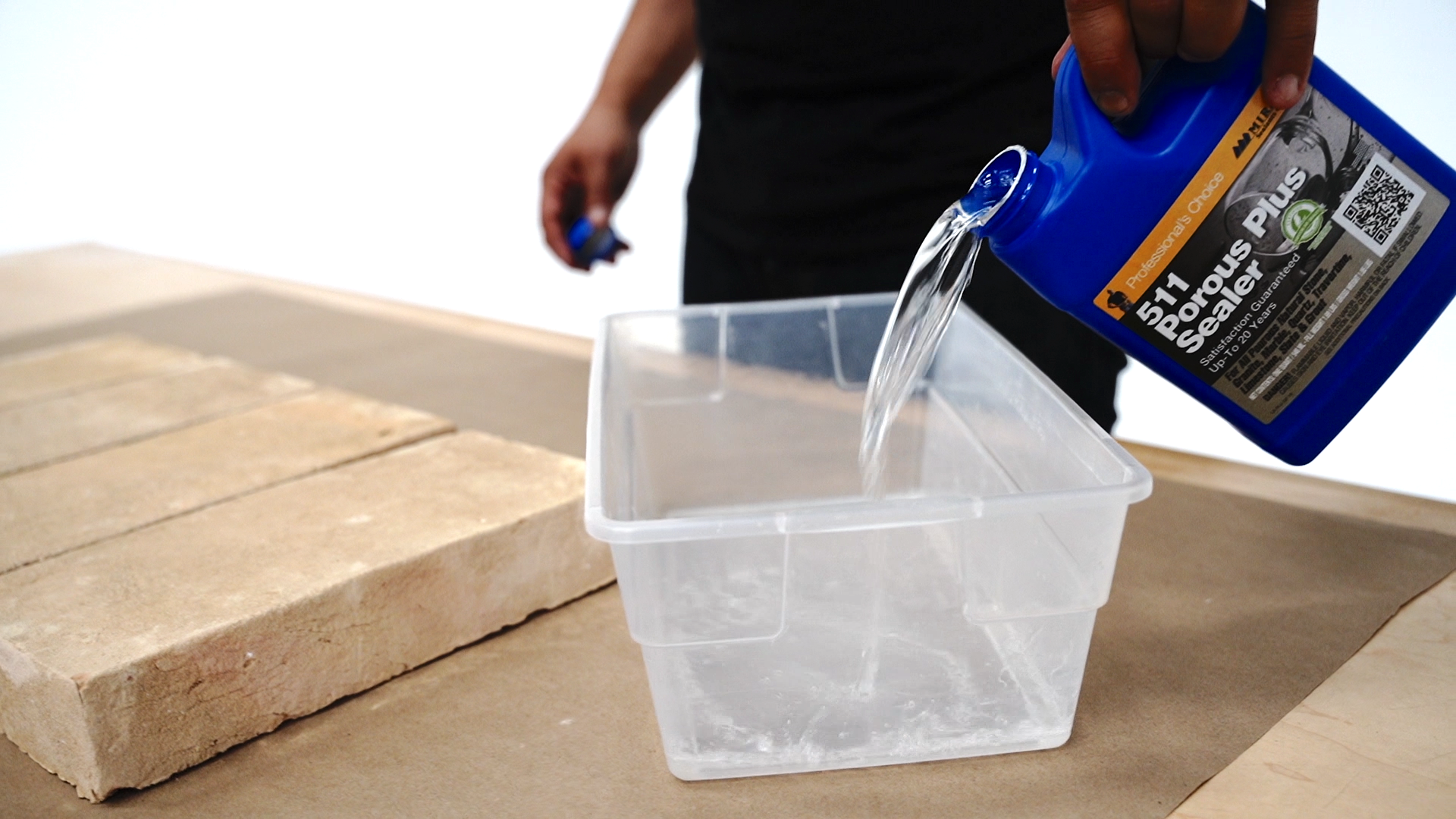
Use a bin or bucket for easy sponge or brush application of the sealer.
Before You Begin: Prep & Cleaning Checklist
A little preparation goes a long way. Before sealing:
1. Clean the surface
- Sweep away dust, debris, and jobsite residue
- If pavers are already installed, remove any loose joint material
- For outdoor areas, rinse with water
2. Let the pavers dry completely
Clay pavers must be fully dry before sealing. Any trapped moisture can prevent the sealer from absorbing properly and may cause cloudiness.
3. Inspect and repair
For outdoor installations, check for loose pieces or areas that need leveling or additional joint sand.
4. Test the sealer
Apply your chosen sealer to 1–2 sample pavers. This ensures you love the final look before sealing the entire project.
Ideal Conditions for Sealing Terracotta Pavers
Sealing works best when:
- Temperatures are moderate (roughly 50–90°F / 10–32°C)
- The surface is fully dry
- Rain, mist, or irrigation is not expected for at least 24 hours
- The area is shaded or not in direct harsh sun (which can cause the sealer to flash-dry too quickly)
In humid or rainy seasons, allow extra drying time between cleaning, installation, and sealing.
When to Seal Pavers
Option 1: Before installation (best protection)
Sealing prior to installation offers the strongest protection against staining from thinset, grout, and handling.
Option 2: Before grouting
If sealing before installation isn’t feasible, sealing right before grouting is the next best approach.
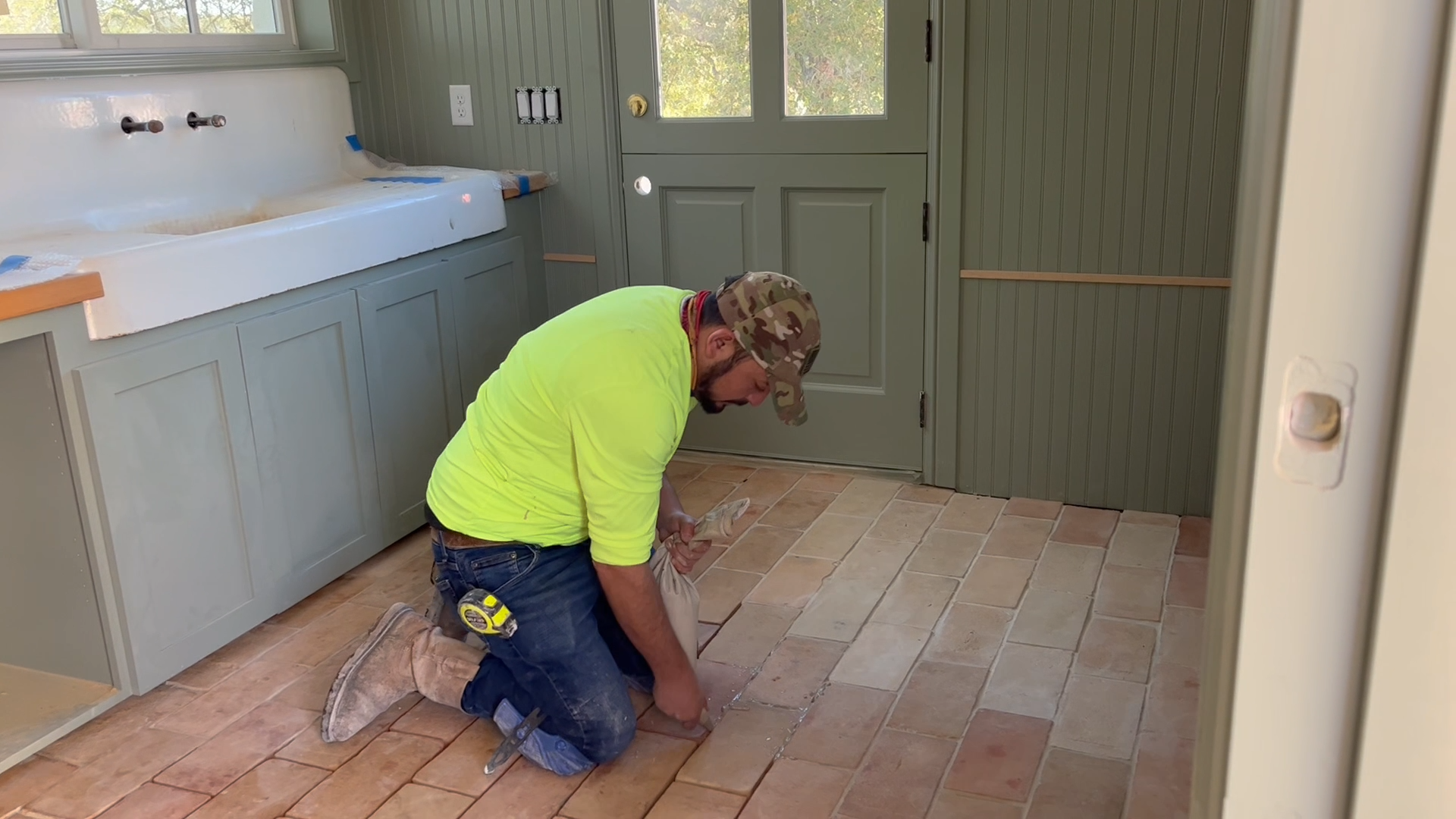
Tile installer grouting clay pavers into the floor at @FinnFamilyFarm.
To apply the sealer, brush, sponge, or spray it onto the surface according to the manufacturer’s instructions, then allow it to dry fully. For best protection, we recommend three coats, though more may be needed depending on application method, traffic, and space usage.
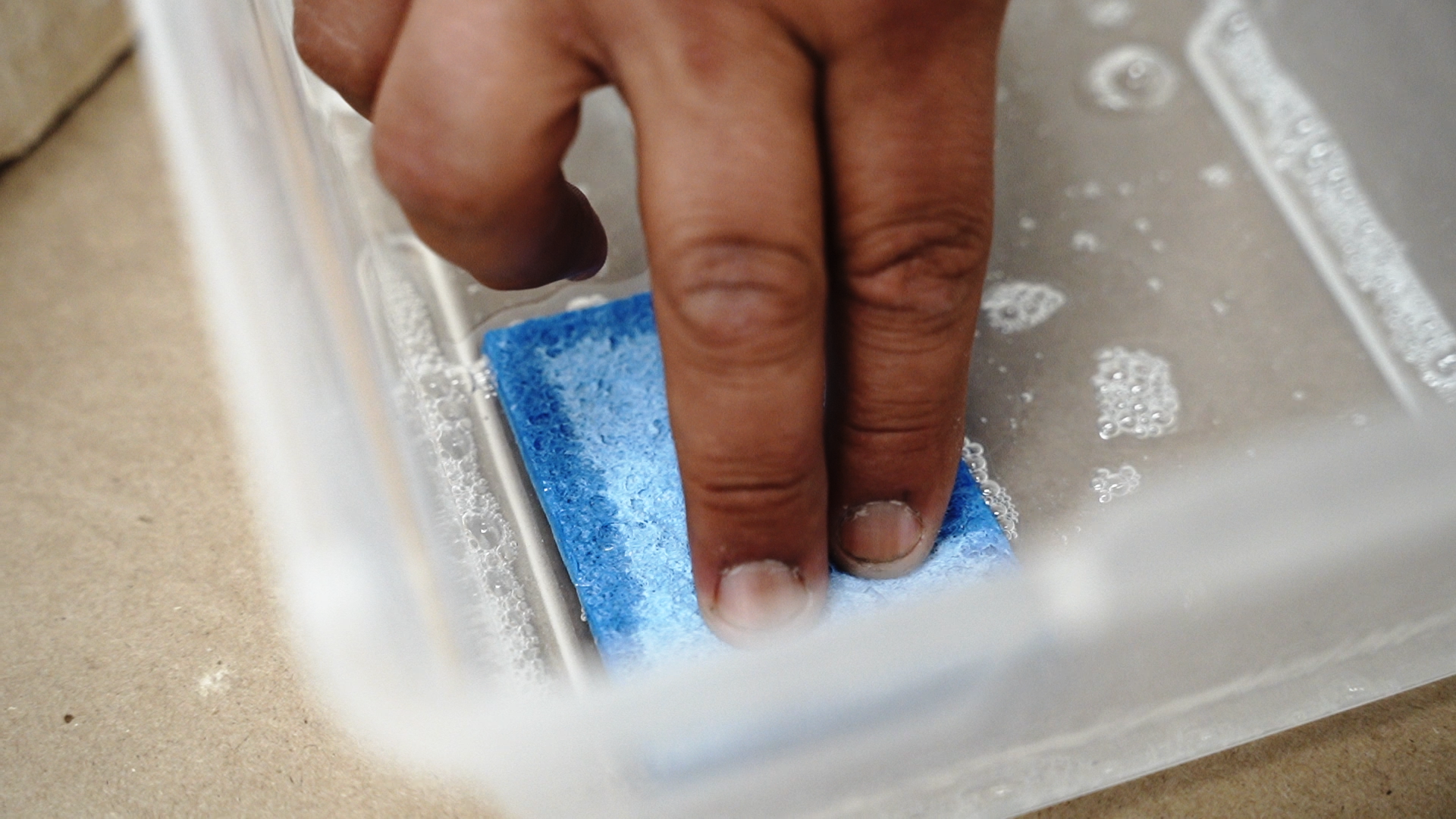 Use a sponge to apply the sealer.
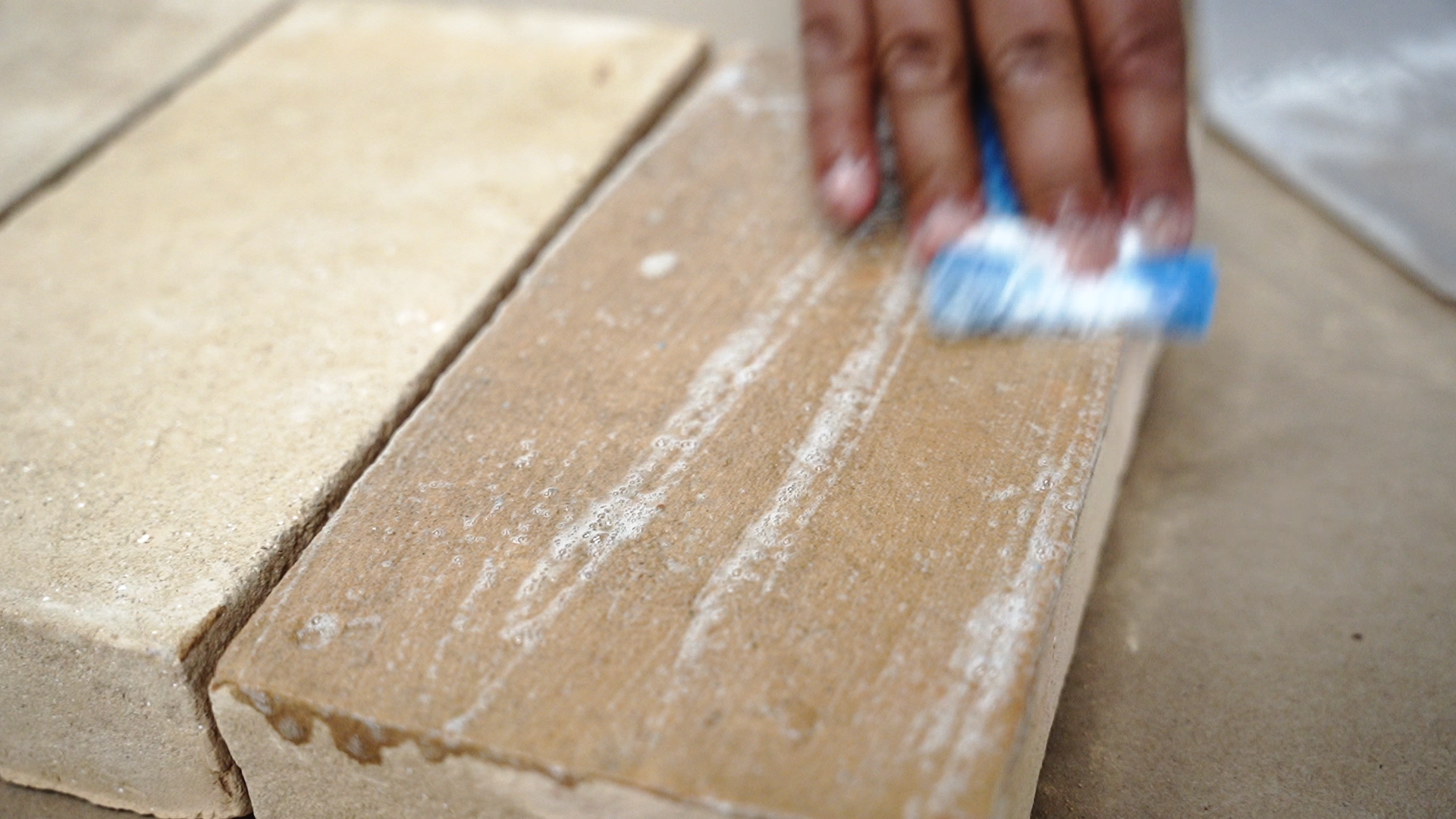 Apply the sealer by scrubbing it in with a sponge.
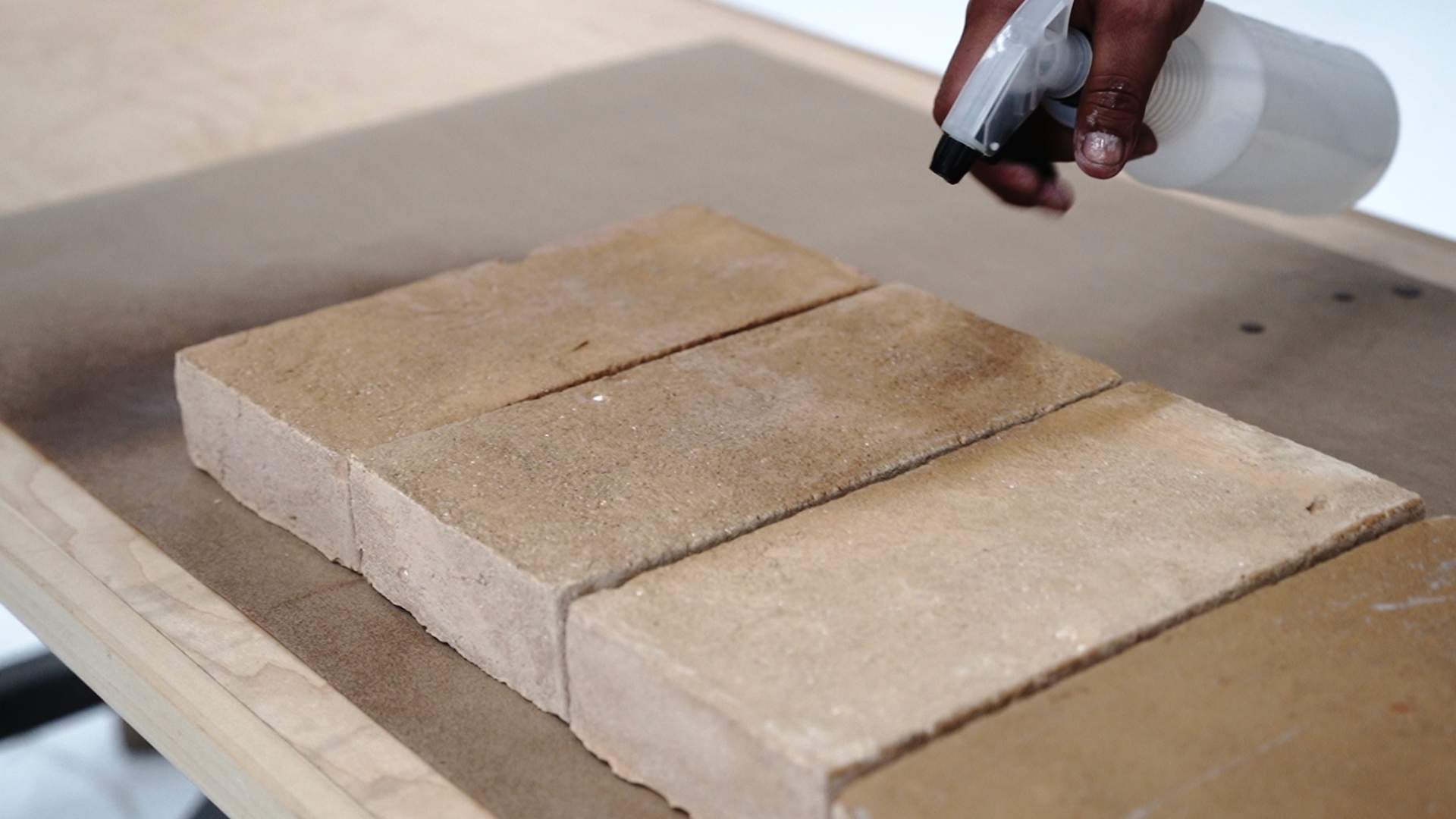 You can also spray sealer onto the paver surface.
Because clay pavers have a heavily textured surface, they create a high-traction, slip-resistant floor. Sealing makes them more resilient to moisture absorption, but a gentle patina and natural character will still develop over time; that’s part of the charm of real clay.
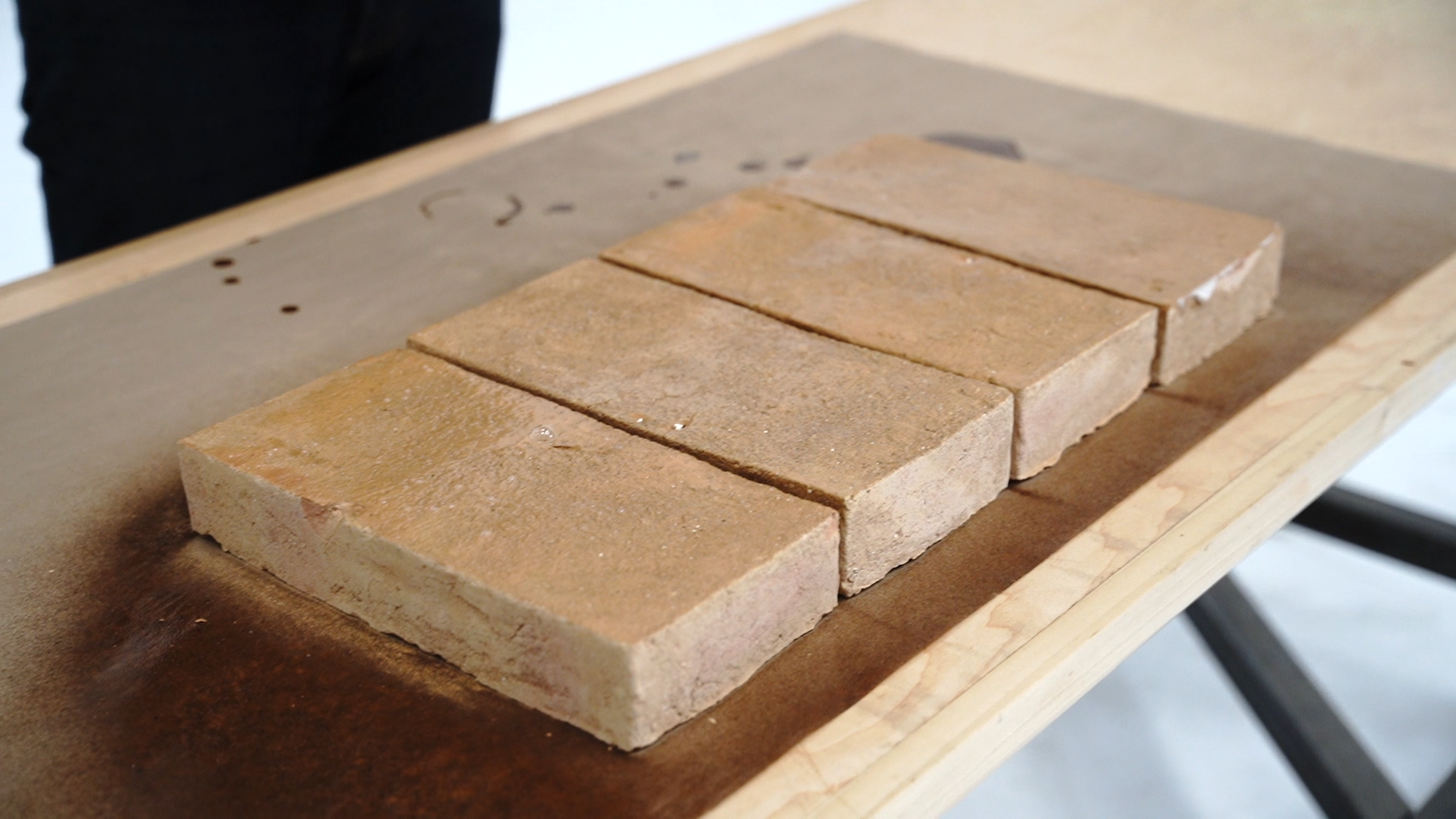 We recommend three layers of sealer for the best protection.
Application Tips to Prevent Issues
- Work in small sections to maintain even coverage
- Apply thin coats, light applications absorb more effectively
- Watch for puddling in textured areas and wipe away excess
- If using a sprayer, keep a consistent distance from the surface
- Never rush drying time between coats; this prevents streaks or cloudiness
Troubleshooting & FAQs
“My pavers darkened more than expected.”
Different sealers enrich the clay at different levels. Always test first to preview the color shift.
“The surface looks streaky.”
This usually means a coat was applied too thickly or dried unevenly. Let the surface fully cure, then apply a light corrective coat.
“Are sealed terracotta pavers slippery?”
Clay Imports pavers are naturally textured and slip-resistant. As long as the sealer is applied evenly and allowed to cure, it should not become slippery.
“Can I pressure wash sealed pavers?”
We don’t recommend pressure washing sealed clay pavers. High pressure can damage the sealer, erode joints, and wear down the clay surface. For routine cleaning, use sweeping, a garden hose rinse, and gentle pH-neutral cleaners.
“I missed a spot. What should I do?”
Once dry, reapply sealer to the missed area, or lightly recoat the full surface for uniformity.
Maintenance & Resealing
Sealed pavers are easy to live with, but they do require periodic care.
Ongoing care
- Sweep and rinse regularly
- Clean spills promptly
- Avoid harsh chemicals
When to reseal
Every few years (typically every 3–5 years), check how well water beads on the surface. If water absorbs instead of beading, it may be time to refresh the sealer. Outdoor or high-traffic spaces may need more frequent resealing.
Sealing won’t stop your pavers from taking on character. A soft, natural patina is expected and part of the beauty of terracotta.
Explore More
Browse our full terracotta paver collection and order samples to get a feel for the clay tone and texture before installation.
If you have questions about sealing or your specific project, we’re here to help at contact@clayimports.com.
Installation plays a major role in the performance of clay pavers. Clay Imports does not provide installation warranties. Always inspect your material upon arrival and consult your installer for job-specific guidance. This overview is meant as a general resource; every project is unique.