From destination restaurants to a Dallas fashion flagship, these Clay Imports breeze block projects prove one small architectural unit can do a lot of heavy design lifting.
There are materials that finish a space, and then there are materials that help shape it. Breeze block belongs firmly in the second camp.
For architects, interior designers, builders, and hospitality teams, a perforated clay wall can solve several design problems at once: defining circulation, screening a service area, creating privacy between tables, filtering daylight, adding airflow, or simply giving a room an architectural focal point that looks good from both sides.
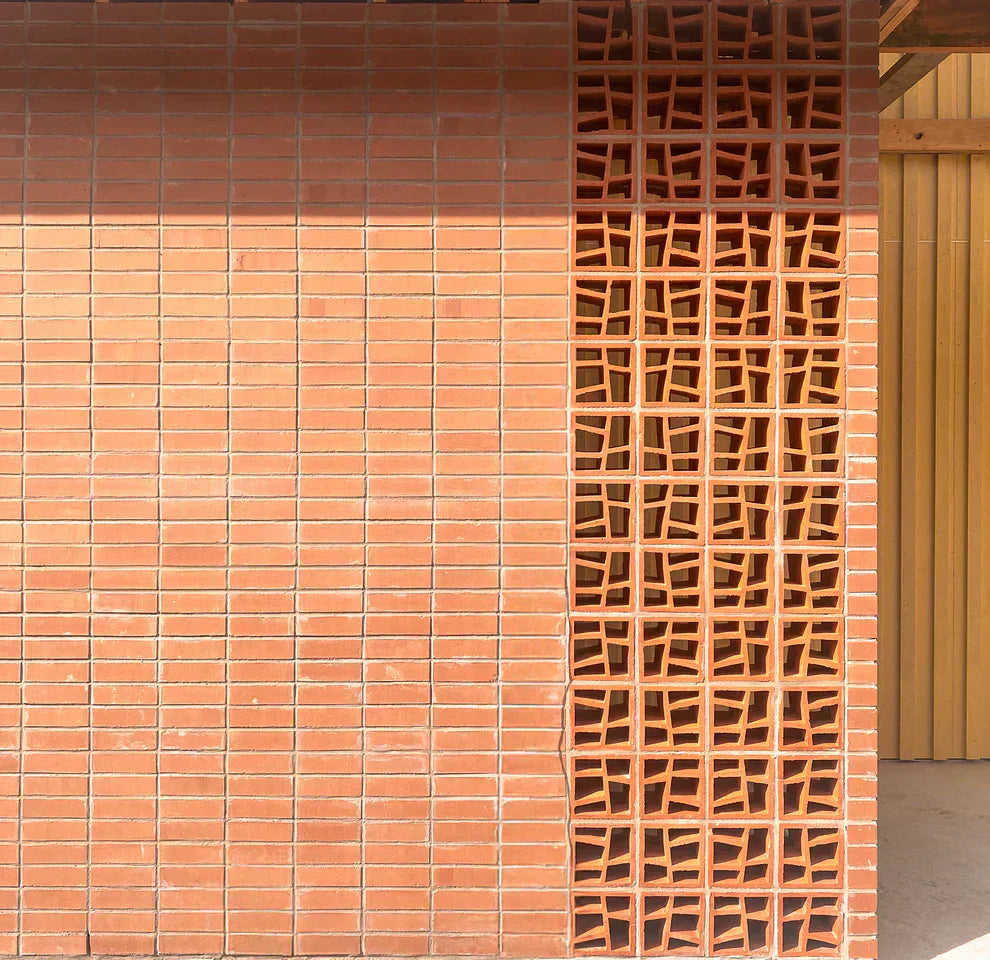
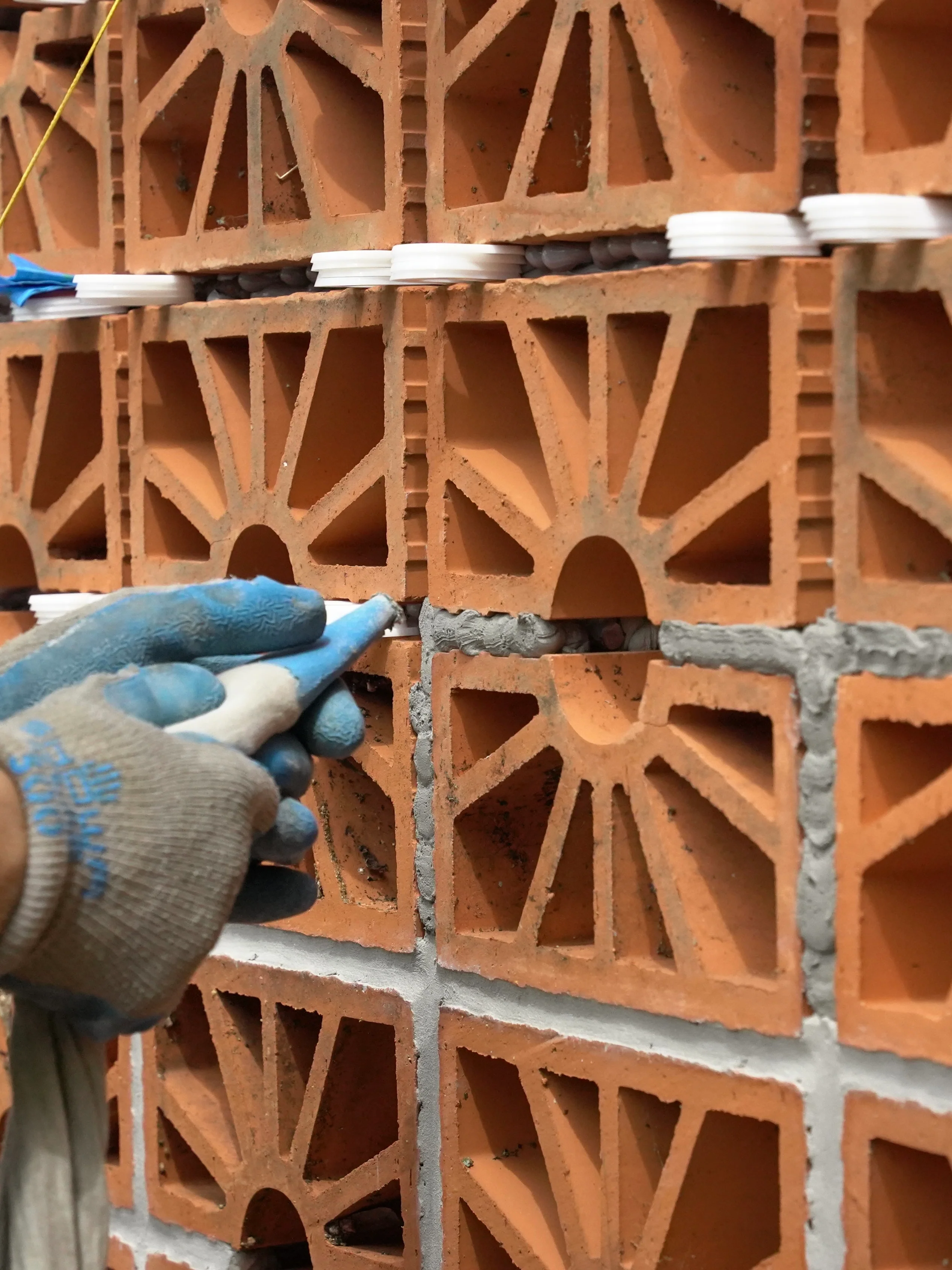
Clay Imports breeze blocks are made in Mexico from natural clay and are designed for decorative, non-load-bearing applications. Their open geometries bring warmth and shadow to commercial interiors without the visual weight of a solid partition: a useful trick in restaurants, cafés, patios, retail environments, and other spaces where openness is part of the experience.
And designers have been putting them to work in some seriously good projects.
Here are ten of our favorite examples, and the ideas trade professionals can borrow from each.
- Lela Rose Flagship, Dallas
- Ometeo, Tysons, Virginia
- Rancho Lewis, Charleston
- Serrano’s, Austin Mopac
- Chaparral Cantina, Lockhart
- La Maya, Hellertown, Pennsylvania
- Perdida, Denver
- Nixta Taqueria, Austin
- Loodos Coffee & Donuts, Louisville
- Nómada, Verona, New Jersey
- Why Breeze Block Keeps Working in Commercial Design
- Ready to Put Breeze Block to Work?
1. Lela Rose Flagship, Dallas
At fashion designer Lela Rose’s Dallas flagship, Ventana breeze blocks curve around the changing rooms, creating an enclosure that feels substantial without becoming closed off. Studio DB went a step further by inserting custom oak elements into the block wall, turning the partition into display architecture for sculptural birds and merchandise.

Retail dressing rooms usually call for privacy. Studio DB found a much more interesting way to provide it at Lela Rose’s Dallas flagship | Ventana Breeze Block
It is a clever reminder that breeze block does not have to function as a static wall. It can become part screen, part fixture, part storytelling device.
The trade takeaway: Treat an open masonry partition like millwork. Thoughtful inserts, shelving, lighting, or display elements can give a simple repeating module a second job.
2. Ometeo, Tysons, Virginia
Created for Long Shot Hospitality, the expansive Tex-Mex restaurant by GrizForm Design Architects layers antique and vintage objects, hand-painted tile, terracotta, rustic wood, woven fixtures, and saturated color across multiple dining areas, bars, and an upper mezzanine. Clay Imports’ Petalo breeze block fits naturally into that vocabulary: earthy enough to belong to the architecture, graphic enough to hold its own against the restaurant’s many visual moments.

Ometeo is a study in material-rich hospitality design. GrizForm Design Architects | Petalo Breeze Block
The block also speaks to one of the project’s larger ideas: finding a contemporary visual language at the meeting point of Texas and Mexico without reducing either place to a theme.
The trade takeaway: In maximalist hospitality spaces, repetition can actually create calm. A breeze block wall gives the eye a consistent grid against a more layered palette of artwork, lighting, color, and furniture.
3. Rancho Lewis, Charleston
Rancho Lewis brings West Texas to Charleston with a mix of rustic references and polished detailing. Designed with B. Berry Interiors, the restaurant draws from El Paso, New Mexico, ranch culture, and the borderlands rather than relying on a generic Southwestern mood.

B. Berry Interiors | Petalo Breeze Block
Petalo’s sunburst-like geometry feels right at home in that world. The terracotta color carries the warmth of the desert palette, while the openings keep larger partitions from feeling too heavy inside a hospitality space.
This is breeze block doing what breeze block does best: feeling nostalgic and contemporary at exactly the same time.
The trade takeaway: Material authenticity matters. Natural terracotta can introduce color without adding another applied finish, making it especially useful alongside wood, leather, plaster, metal, and other tactile commercial materials.
4. Serrano’s, Austin Mopac
Why pick one pattern when two can make the wall more interesting?
At Serrano’s Austin Mopac, Petalo and Ventana breeze blocks are combined to turn an architectural insert into a repeating composition. Rather than reading like a generic screen, the wall has its own visual rhythm—part geometry, part pattern, part masonry.

Clay Imports has also worked with Serrano’s and Michael Hsu Office of Architecture on the restaurant group’s refreshed interiors, where breeze blocks help divide booth areas while allowing sightlines and light to continue through the space.
That permeability matters in restaurants. Guests want a sense of enclosure at the table, but operators and designers still need spaces to feel connected.
The trade takeaway: Mixing breeze block patterns is a simple way to make a standard module feel custom. Mock up the repeat before installation—the orientation of each block can completely change the final pattern.
5. Chaparral Cantina, Lockhart
In downtown Lockhart, Chaparral Cantina brings tequila, snacks, music, and a laid-back gathering space to the historic square. Its Petalo breeze blocks fit neatly into that mix.
Here, the block feels less like a capital-A architectural statement and more like part of the atmosphere. That is an important distinction.

Petalo Breeze Block functioning as decorative and privacy element.
Not every commercial installation needs to become the room’s loudest feature. Sometimes the repeating clay pattern simply gives a wall enough depth and shadow to make the entire environment feel more considered.
The trade takeaway: Scale breeze block to the project. A smaller screen or inset panel can have more impact than covering an entire elevation—and can be easier to coordinate with existing construction.
6. La Maya, Hellertown, Pennsylvania
At La Maya, designers April and Gabrielle Wilson of Locust Bloom had a practical issue to solve: create privacy near the restroom corridor and back-of-house entrance without inserting a visually dead wall into an already expressive restaurant.
Their answer was a breeze block screen combining Ventana and Petalo.

La Maya restaurant | Design by Locust Bloom | Ventana + Petalo Breeze Blocks
The designers laid the pieces out on the floor first to develop the pattern, turning a necessary privacy barrier into another layer of the restaurant’s warm, funky interior. The screen sits comfortably among deep greens, patterns, tile, wallpaper, wood, and playful artwork.
This may be one of the most useful commercial applications on the list because the design move is so transferable.
The trade takeaway: Use breeze blocks to hide the things guests do not need to see—restroom approaches, host storage, service circulation, prep zones—without creating a hard visual stop.
7. Perdida, Denver
At Perdida in Denver, Gastamo Group flips one of terracotta’s most recognizable characteristics on its head.
Clay Imports’ Lava breeze block appears in white, allowing its intricate geometry to become the focus rather than its natural clay color. The result feels beachy, light, and architectural—a strong fit for the restaurant’s coastal Mexican point of view.
It is also proof that choosing terracotta does not lock a specification into a rust-colored palette.

Gastamo Group | Lava Breeze Block
Raw clay can bring warmth; painted or glazed block can let pattern take the lead.
The trade takeaway: Consider color and geometry separately. If natural terracotta competes with the palette, changing the finish can preserve the dimensional quality of breeze block while letting it disappear—or pop—in a very different way.
8. Nixta Taqueria, Austin
Nixta Taqueria has never been interested in beige hospitality.
The Austin restaurant’s personality is energetic, handmade, colorful, and a little irreverent, making Dulce breeze block a natural addition. Its rounded, floral geometry has enough personality to feel decorative while the repeating grid keeps it architectural. Clay Imports features the Nixta installation as an example of the Dulce pattern in a commercial setting.

Dulce Breeze Block outdoor fence at Nixta Taquería.
It is a useful lesson for smaller restaurants and independent concepts: a memorable architectural gesture does not require an enormous footprint.
A relatively straightforward block installation can become a visual signature—particularly when it appears in the dozens of photos guests take every day.
The trade takeaway: Think beyond square footage and consider camera angles. In hospitality, a well-positioned screen can become part of the brand identity long after the construction crew leaves.
9. Loodos Coffee & Donuts, Louisville
At Loodos Coffee & Donuts in Louisville, Natalie O Design uses Clay Imports Pozos breeze blocks to shape an inviting, light-filled café rather than simply decorate it. The blocks help define zones while maintaining the visual connection and openness that make cafés feel social.

Coffee. Donuts. Pozos breeze blocks. We like where this is going. Natalie O Design
That distinction is especially useful in smaller commercial footprints. Every full-height opaque wall divides a room; an open clay screen can organize it.
The pattern also adds something hospitality spaces increasingly need: texture that reads just as well from ten feet away as it does up close.
The trade takeaway: In cafés and fast-casual spaces, use semi-transparent partitions to choreograph queues, seating, and circulation while keeping staff sightlines and the overall room intact.
10. Nómada, Verona, New Jersey
Nómada in Verona channels the laid-back mood of Tulum with a dash of 1980s Acapulco exuberance. Skopos Hospitality, with co-founder Dean Maroulakos leading the concept and design, transformed the New Jersey space with terracotta flooring, arches, eucalyptus, textured surfaces, and colorful Mexican references.

Tigre breeze blocks | Design Skopos Hospitality
It is exactly the sort of interior where perforated clay architecture makes sense: a material that feels earthy but graphic, familiar but not flat.
For hospitality teams trying to create transportive environments, that combination is valuable. Guests do not experience a restaurant as a material schedule. They experience a sequence of thresholds, views, textures, shadows, and moments.
Breeze block can help connect all of them.
The trade takeaway: Specify materials as part of the guest journey. Screens work particularly well at entries, transitions, waiting areas, bar boundaries, and other moments where you want to reveal the next space without giving everything away.
Why Breeze Block Keeps Working in Commercial Design
Ten projects. Plenty of different aesthetics.
And that might be the strongest argument for the material.
A Lela Rose boutique does not look like Nixta. Ometeo does not look like Perdida. A Lockhart cantina and a Louisville coffee shop have completely different operational needs.
Yet breeze block works in all of them because it is not a prescribed “look.” It is an architectural tool.
For trade professionals, a few characteristics make terracotta breeze block especially useful:
-
It creates separation without complete enclosure. Useful for dining zones, patios, retail fitting rooms, waiting areas, and circulation.
-
It filters light and views. Openings introduce shadow and movement that change throughout the day.
-
It adds material warmth. Natural clay brings texture and tonal variation to otherwise polished commercial interiors.
-
It works indoors and out. Depending on climate, detailing, reinforcement, and installation conditions, screen walls can move between interior and exterior applications.
-
It offers pattern at architectural scale. Instead of applying a graphic to a surface, the wall itself becomes the pattern.
-
It plays well with other materials. Steel frames, wood, plaster, tile, stone, greenery, and lighting can each shift the personality of the same block.
Clay Imports breeze blocks are decorative and non-load-bearing, so commercial installations should be evaluated alongside the project architect, engineer, contractor, or mason. Large-scale and freestanding walls may require reinforcement or anchoring, and exterior applications deserve special consideration for wind, moisture, and freeze-thaw conditions.
That technical planning is worth doing early.
Because when breeze block is treated as architecture rather than an accessory, things get interesting.
Ready to Put Breeze Block to Work?
Start with the function.
Do you need to screen a service zone? Define a dining room? Pull daylight deeper into a space? Create a memorable entry? Add privacy to a patio? Give a bar or retail environment an architectural centerpiece?
Then pick the pattern.
Ventana keeps things graphic and open. Petalo brings a more decorative, sunburst-like rhythm. Dulce softens the grid with rounded geometry. Lava creates a dense, intricate repeat. And mixing patterns can push a commercial installation into completely custom territory without requiring a custom-made unit.
For architects, designers, builders, and hospitality teams, that is the sweet spot: a material with enough personality to be memorable and enough flexibility to solve a real design problem.
Call it a screen. Call it a partition. Call it a breeze block wall.
We call it a pretty good reason to think beyond drywall.
Explore Clay Imports Breeze Blocks and trade resources for your next commercial or hospitality project.