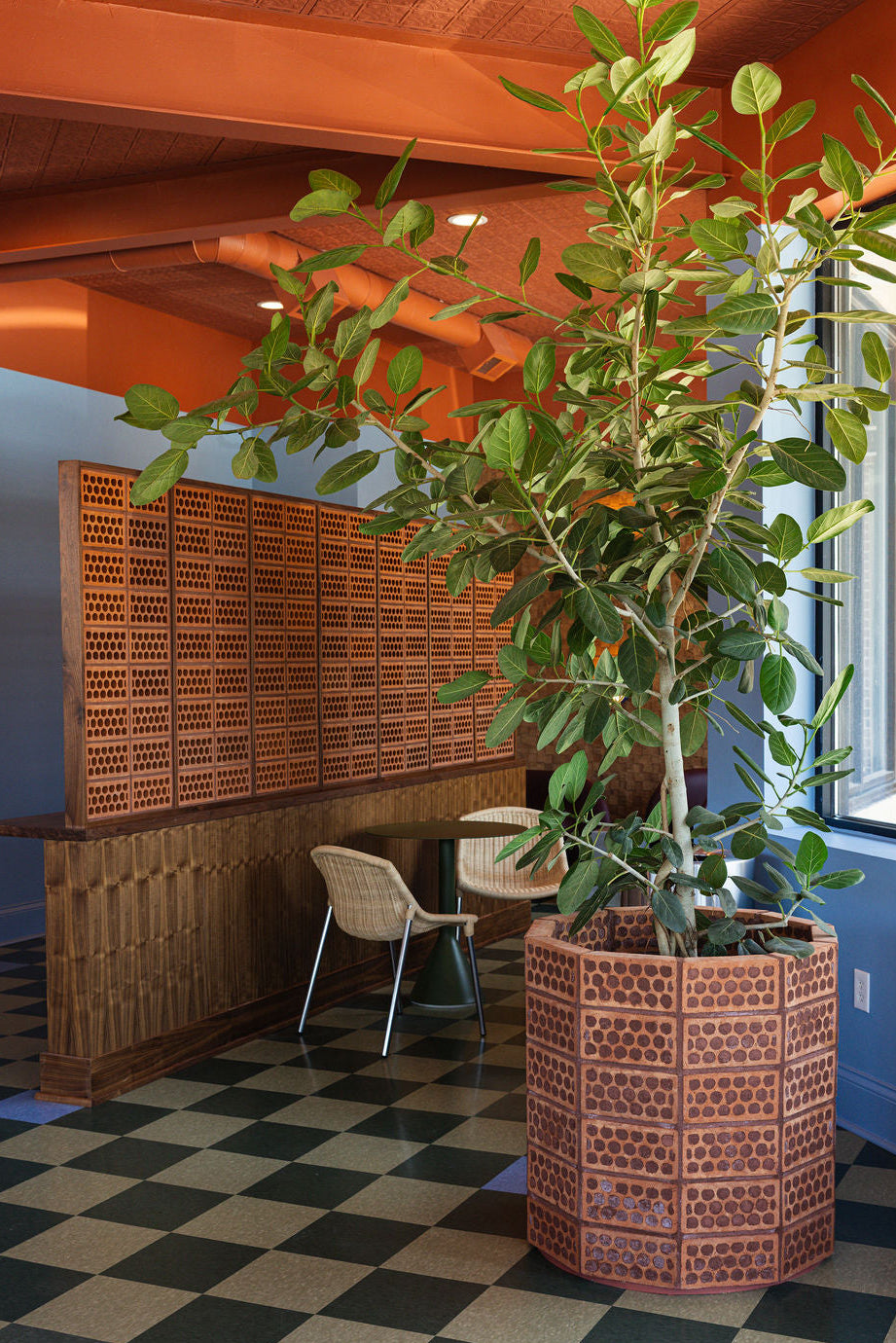
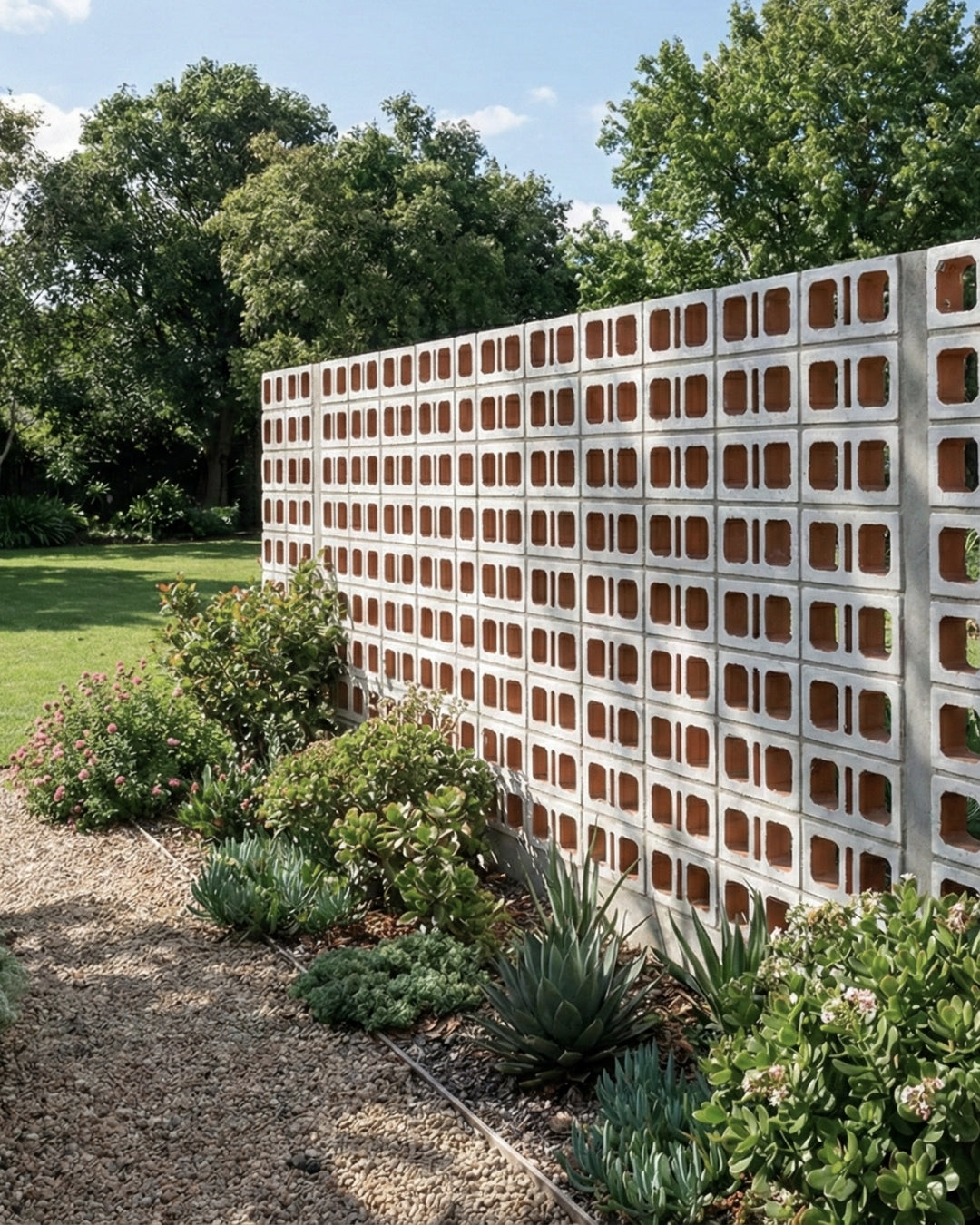
When you combine breeze blocks with clay pavers, you get the best of both worlds: a wall that feels solid and grounded, but still lets in light, air, and a little bit of magic.
The pavers create the structure and mass, while the breeze blocks bring in light, airflow, and pattern. It’s that balance that gives this look its architectural feel.
If you’ve been seeing this look pop up in modern homes, courtyards, or desert-inspired architecture, here’s how to recreate it using baked clay pavers and breeze blocks.
- What Is a Breeze Block Wall?
- Step 1: Start with a Solid Base (Clay Pavers)
- Step 2: Add a Breeze Block Feature
- Step 3: Pick Your Pattern
- Step 4: Let the Light Do Its Thing
- Step 5: Mix in Natural Materials
- Why This Combo Works
- Quick Design Tips
- FAQ: Designing with Breeze Blocks + Baked Clay Pavers
- Bring This Look to Life

What Is a Breeze Block Wall?
A breeze block wall (sometimes called a screen block wall) uses patterned blocks to let air and light pass through while still giving you privacy.
Pair that with solid clay pavers, and you get a really nice balance of:
- Structure
- Openness
- Light + shadow
It’s a go-to approach for outdoor privacy walls, patios, entryways, and courtyards.
Step 1: Start with a Solid Base (Clay Pavers)
Think of your pavers as the backdrop.
Using baked clay pavers, create a clean, simple base that anchors the entire wall.
A few tips:
- Go with a tight grid layout for a modern feel
- Keep joints consistent and plan your layout so it aligns cleanly with your breeze block section
- Let larger sections stay uninterrupted
This gives you that warm, earthy foundation that makes the breeze blocks stand out.
Step 2: Add a Breeze Block Feature
Now for the fun part, bringing in the breeze block wall section.
Instead of covering the whole wall, think of it as a feature moment.
Great spots for it:
- Entryways
- Courtyard walls
- Outdoor showers
- Patio dividers
One well-placed section goes a long way.
Step 3: Pick Your Pattern

This is where the personality comes in.
Different breeze block patterns create totally different vibes:
- Geometric / sunburst styles → bold, mid-century energy
- Organic shapes → softer, more artistic feel
- Clean, linear designs → subtle and modern
You can keep it consistent with one pattern, or rotate blocks for a bit of variation.
Pro Tip: Plan Your Layout First


Because breeze blocks and pavers are modular, your layout matters. Start with your breeze block size, then build your paver grid around it so everything aligns cleanly. A little planning up front makes the final result feel intentional and architectural.
Step 4: Let the Light Do Its Thing
The real magic of a breeze block wall? Light.
As the sun moves, the blocks cast shadows that shift throughout the day. It adds depth and movement to what would otherwise be a flat surface.
Plus, you get:
- Natural airflow
- Filtered sunlight
- A space that feels open, not boxed in
This interplay of light and shadow is what makes the wall feel dynamic and architectural, even with simple materials.

Step 5: Mix in Natural Materials
To complete the look, pair your wall with materials that play nicely with clay:
- Wood beams or ceilings for warmth
- Concrete or stone floors for contrast
- Simple landscaping to keep things grounded
It all works together to create that clean, architectural feel without trying too hard.
Why This Combo Works
It’s not just about looks; this setup actually performs really well:
- Lets air move through your space
- Adds privacy without closing things off
- Holds up over time (fired clay = durability)
- Helps regulate temperature
So yeah, it’s doing more than just looking good.
 Brisa breeze block paired with baked pavers.
Quick Design Tips
If you’re planning a project, here’s a simple way to start:
-
Aim for a mostly solid wall with a clearly defined breeze block section. The exact ratio can vary, but the goal is to give the breeze block enough space to make an impact
- Stick to one main pattern for a cohesive look
- Don’t force perfect alignment, different paver sizes (like 5x9 brick vs 8x16 or 16x16) won’t always match breeze block modules exactly
-
Instead, use joint spacing, transitions, or strategic cuts to keep everything feeling intentional
- Think about sun direction for the best shadow play

Brisa breeze block paired with baked pavers.
FAQ: Designing with Breeze Blocks + Baked Clay Pavers
Do the pavers and breeze blocks line up perfectly?
Not always, and that’s okay.
Breeze blocks are typically modular, but baked clay pavers come in different sizes and proportions. If you’re using multiple formats like 5 x 9 x 2 brick along with 8x16 or 16x16 pavers, you’ll likely need to adjust your layout slightly.
A clean look comes from planning, not perfect one-to-one alignment.
What’s the best way to plan the layout?
Start with your breeze block section first.
Use that as your anchor, then build your paver layout around it. You may need to:
- Shift joint lines slightly
- Introduce a transition row
- Cut a few pavers for alignment
This is completely normal and part of achieving a balanced, intentional design.
Can I mix different paver sizes in the same wall?
Yes, and it can look really good when done thoughtfully.
For example:
- Use a 5x9x2 brick for tighter, more detailed areas
- Use 8x16 or 16x16 pavers for larger, more minimal sections
Just keep transitions clean and avoid overly complex patterns right next to the breeze blocks.
Do breeze blocks and pavers install the same way?
They’re similar, but not identical.
- Breeze blocks are typically stacked and mortared as a screen wall
- Thicker brick-style pavers (like 5x9x2) behave more like masonry units
- Thinner formats (like 8x16 or 16x16) are often installed more like a tile over a prepared substrate
Because of this, it’s important to:
- Work with an experienced installer
- Plan your substrate and wall build-up in advance
What should I watch out for during installation?
A few key things:
- Make sure your wall is flat and properly prepared before starting
- Dry lay sections to test alignment before committing
- Expect slight variation in handmade materials
- Don’t force perfect alignment, aim for visual balance instead
Will this work for outdoor applications?
Yes, this combination is especially well-suited for outdoor walls, courtyards, and screens.
Fired clay holds up well over time, and breeze blocks allow for airflow, making this a great option for warm climates and non-freezing environments. This type of installation is especially popular in desert and mild-weather regions.

Bring This Look to Life
Whether you’re building a modern privacy wall, a courtyard screen, or just want to add some texture to a space, combining breeze blocks with clay pavers is a simple way to get there.
Larger-format pavers create a more refined, modern look, while brick formats add texture and variation, so you can tailor the design to your space.
It’s one of those rare details that feels both architectural and approachable, grounded in tradition but completely at home in modern design.
Explore Clay Imports’ collection of breeze blocks and baked pavers to start your project.