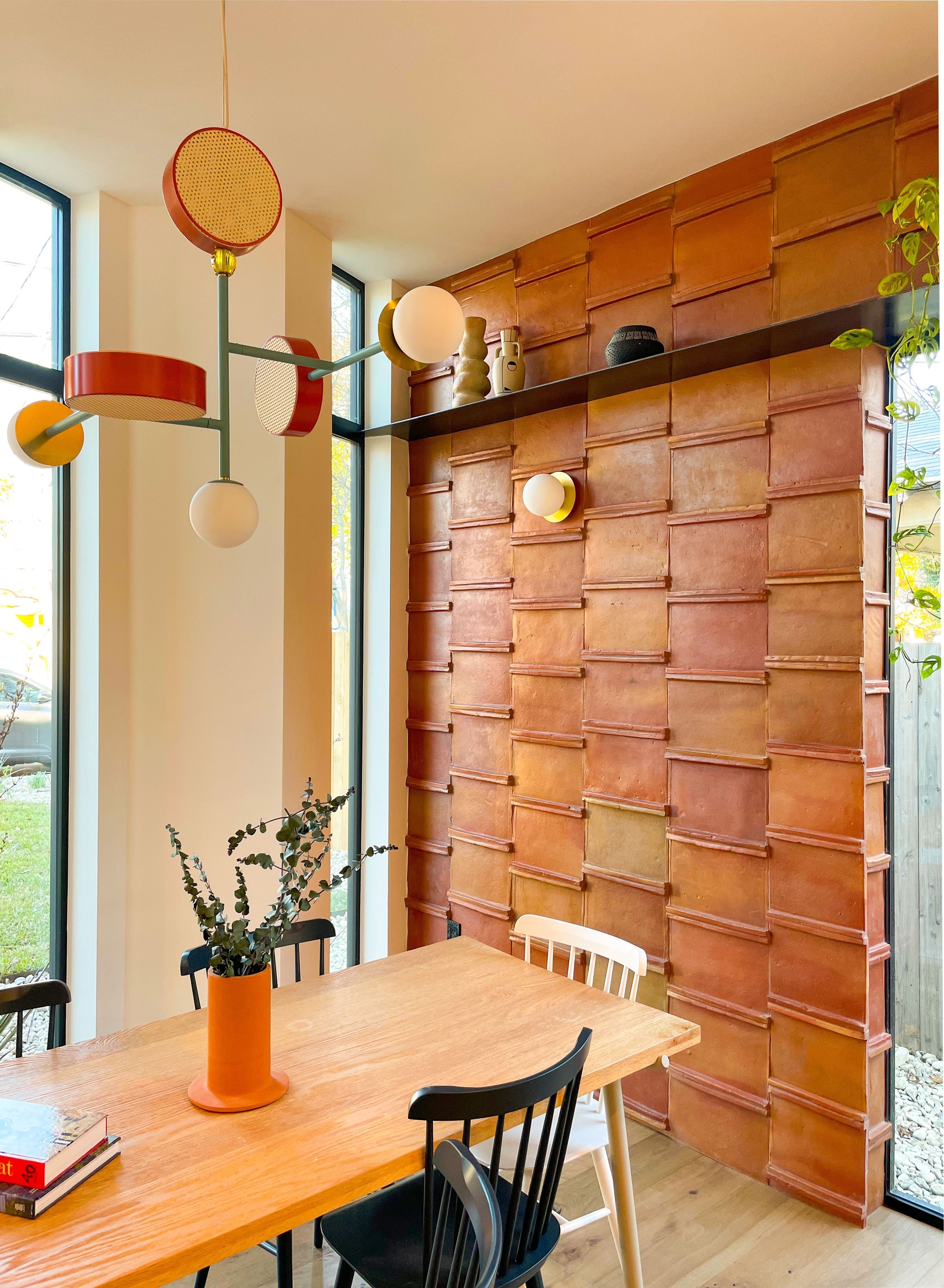
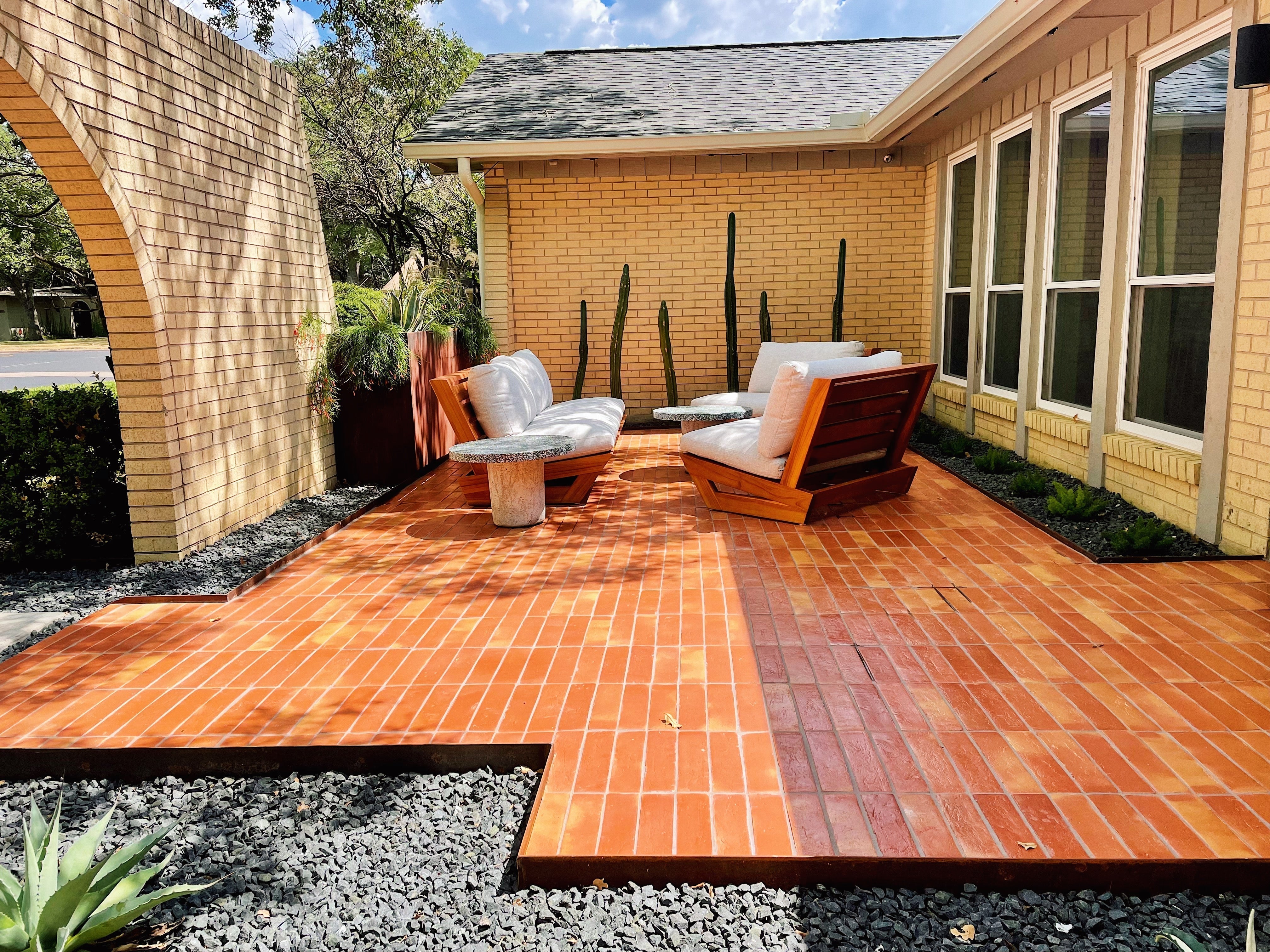
Handcrafted ceramic tiles can vary in color, tone, sheen, and surface appearance, even when produced using the same glaze formulation. Depending on the glaze, these differences may include lighter or darker shades, speckling, black spotting, pinholes, or subtle changes in surface texture.
These characteristics develop through glaze preparation, application, and kiln firing. Understanding these processes helps explain why glazed ceramic tiles may vary within an order and between production batches.
- How Are Ceramic Tile Glazes Made?
- How Are Glazes Applied to Ceramic Tile?
- How Does Kiln Firing Affect Glaze Color?
- Why Do Ceramic Glazes Have Speckles, Pinholes, or Surface Irregularities?
- Why Can Glaze Colors Differ Between Production Batches?
- Will My Tile Match My Sample?
- Can I Order More Tile Later and Expect It to Match?
- How Should Handcrafted Glazed Tile Be Installed?
- Understanding Glaze Variation in Handcrafted Tile

How Are Ceramic Tile Glazes Made?
Ceramic glazes are made from carefully measured raw materials, typically supplied as dry powders and mixed with water to create a liquid mixture that can be applied to tile.
Artisans follow established glaze formulations to maintain consistency in color and finish. However, the finished appearance depends on more than the formulation alone.

Differences in raw materials, glaze preparation, application thickness, and firing conditions can influence how a glaze develops. Even when the same formulation and production methods are followed, subtle differences may appear in the finished tile.
How Are Glazes Applied to Ceramic Tile?
Glaze application methods vary depending on the tile's shape, design, and intended finish.
Common application techniques include:
Hand-pouring: Liquid glaze is poured over the tile surface to create coverage.

Spray application: Glaze is sprayed onto the tile to distribute it across the surface.
Conveyor application: Tiles move through equipment that applies glaze in a controlled process.
Hand-detailing: Small applicators, such as squeeze bottles, are used to apply glaze within raised or recessed designs.

Screen application: Glaze is applied through patterned screens, similar to screen printing on fabric.

Each method serves different production requirements and can influence the finished appearance.
Differences in glaze thickness, coverage, and application can affect how color develops. For example, a heavier application may produce a deeper or more concentrated color, while a thinner application may allow more of the underlying clay body to influence the result.
These differences can occur within the same production run, even when the same glaze formulation is used.
How Does Kiln Firing Affect Glaze Color?
Once glaze has been applied, ceramic tiles are fired in a kiln at high temperatures. During firing, the glaze melts and develops its finished surface.

Several factors influence this process, including:
- Kiln temperature and heat distribution
- Firing duration and cooling conditions
- Kiln atmosphere and oxygen availability
- Placement of tiles within the kiln
- The interaction between the glaze and underlying clay
Small differences in these conditions can affect how glaze colors develop, sometimes resulting in changes in saturation, opacity, sheen, or overall tone.
Even tiles fired together may experience slightly different conditions, contributing to variation within a single production batch.
Why Do Ceramic Glazes Have Speckles, Pinholes, or Surface Irregularities?
In addition to color variation, glazed ceramic tiles may develop visible characteristics during glaze application and firing.

Depending on the glaze formulation and clay body, these may include:
- Black spotting: Small dark spots that can develop from minerals or other materials in the clay or glaze during firing.
- Pinholes: Tiny openings or depressions in the glaze surface that may form as gases.
- Speckling: Small concentrations of color distributed across the glaze surface.
- Mottling: Cloudy or uneven color development that creates transitions between lighter and darker areas.
- Color pooling: Areas where glaze accumulates more heavily, sometimes creating deeper or more saturated color.
- Minor surface irregularities: Slight differences in glaze coverage, smoothness, or sheen.
These characteristics are expected in many handcrafted glazed tile collections when they occur within acceptable production standards.
Their size, frequency, and distribution may vary from tile to tile. Not every glaze develops the same characteristics. Acceptable variation depends on the specific tile collection, and characteristics that compromise the tile's intended performance are not considered normal variation.
Why Can Glaze Colors Differ Between Production Batches?
A production batch refers to tiles manufactured during a particular production run.
When a tile is produced again, artisans work to reproduce the established glaze color and finish using consistent formulations and production methods.
However, differences in raw materials, glaze preparation, application, and firing conditions can influence the finished result.

A new batch may appear lighter, darker, warmer, or cooler than a previous batch. The concentration of speckling, mottling, or other glaze effects may also change.
These differences can occur even when the product name, glaze formulation, and production process remain the same.
For this reason, exact color matching between separate production batches cannot be guaranteed.
Will My Tile Match My Sample?
Samples provide a reference for a tile's general color, finish, and material characteristics. However, a single sample cannot represent every shade or surface effect that may appear across a full order.
Samples may also come from a different production batch than the material ultimately purchased.

As a result, customers should expect some degree of variation between samples, website photography, and delivered tile.
For collections with a wider range of color or surface variation, ordering multiple samples can provide additional insight into the material's possible appearance, although samples cannot guarantee the full range of variation in a future production batch.
Can I Order More Tile Later and Expect It to Match?
Additional tile ordered at a later date may come from a different production batch.
Even when the same glaze formulation is used, the new material may not match the original order exactly. These differences can be especially noticeable when new tiles are installed directly alongside existing material.
For this reason, we recommend ordering the full quantity needed for a project, including appropriate overage for cuts, breakage, and future repairs.
How should Handcrafted Glazed Tile Be Installed?

Inspect all tile before installation to review color, finish, dimensions, and surface characteristics.
When variation is present, blend tiles from multiple boxes to distribute differences in shade and glaze effects throughout the installation. Avoid installing one box at a time, as this may concentrate similar shades in certain areas.
Review the material with your installer before beginning installation, and contact Clay Imports with any concerns before the tile is installed.
Understanding Glaze Variation in Hadcrafted Tile
Ceramic glazing combines established formulations, application techniques, and kiln firing. Although these processes are carefully managed, variations in raw materials and production conditions can influence the finished appearance.
Understanding glazing involves established formulations, application techniques, and kiln firing. Although these processes are carefully managed, variations in raw materials and production conditions can influence the finished appearance.
Understanding how glaze variation develops helps customers evaluate samples, anticipate differences between production batches, and plan their tile installations accordingly.