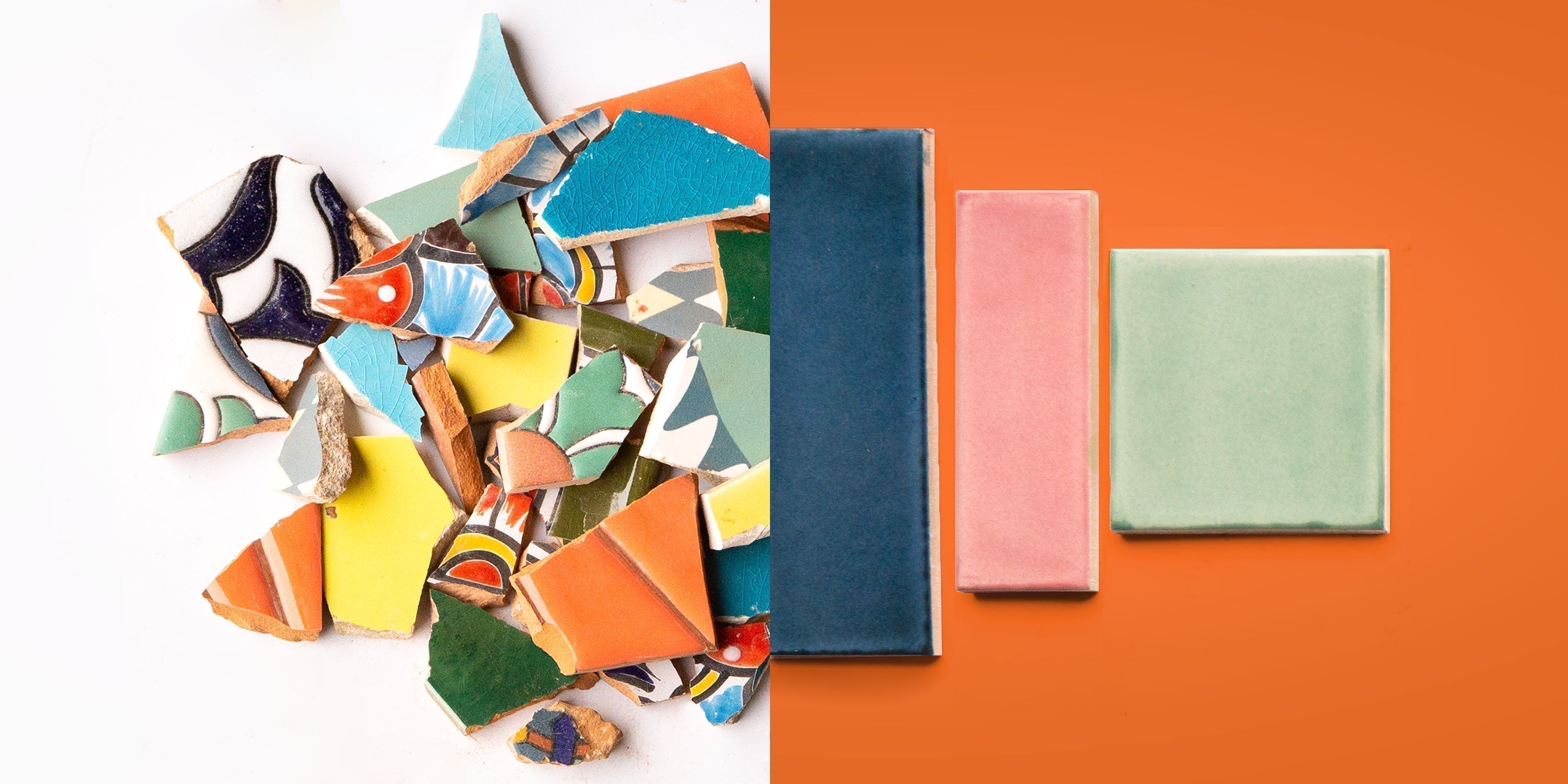

Discover how glazed and sealed clay tiles differ in protection, appearance, and maintenance, and which one fits your space best.
- What is a Glazed Tile?
- What is a Sealed Tile?
- Side-by-Side Comparison
- Should I Top-Seal Pre-Sealed Tiles?
- Should I Seal Glazed Tiles?
- Key Considerations for Wet Areas
When it comes to clay tiles, “glazed” and “sealed” are not interchangeable. They describe different processes that affect durability, look, and maintenance. Understanding the difference helps you select the right finish and care routine for your project.
What is a Glazed Tile?
A glazed tile is a clay tile coated with ceramic glaze before firing in a kiln. Many glazed tiles are fired twice: once to harden the clay body and again to fuse the glaze. The glaze creates the tile’s color and sheen and adds a protective barrier that resists stains and moisture.
Over time, handcrafted glazed surfaces can develop subtle character such as patina and crazing (fine crackle lines in the glaze). These are natural and part of the beauty of glazed clay. Glazes range from glossy to matte and from clear to richly colored, opening up endless design options.
And if you want a terracotta look, without the maintenance, glazed clay tiles available in terracotta-inspired solid tones, like our opaque glaze Barro, Mamey and other solid clay colorways. They are extremely durable, non-porous, and ideal for wet areas when installed correctly.

Glazed tiles excel on walls, backsplashes, and low-traffic floors thanks to their easy-clean, non-porous surface. They can also be used outdoors in mild, non-freeze/thaw climates.

What is a Sealed Tile?
A sealed tile is a porous clay tile (such as Saltillo or natural terracotta) protected by transparent sealant applied after firing. Sealant is not fired in; it’s applied topically or as a penetrating treatment to reduce staining and moisture absorption while keeping the natural clay look.
Sealers vary in finish from matte to glossy and in how much they deepen color. Always test first, especially on unsealed terracotta like Organic Terracotta. Our Saltillo and natural terracotta tiles are pre-sealed at the factory for protection right out of the box.


Glazed vs. Sealed: A Side-by-Side Comparison
| Feature | Glazed Tiles | Sealed Tiles |
|---|---|---|
| How do they gain protection? | Ceramic glaze fired onto the surface (often twice-fired) | Transparent sealant applied after firing; not kiln-fired |
| Appearance | Glossy, satin, or matte; clear or colored; easy to clean | Natural clay look; finish depends on sealer (matte to glossy) |
| Where can they be installed? | Indoor walls, backsplashes, countertops, floors; some outdoor use in mild climates | Indoor and outdoor in mild climates; great for floors and patios; pre-sealed options simplify install |
| Maintenance | Periodic cleaning with non-abrasive tile cleaner | Regular cleaning plus periodic resealing, especially in high-traffic areas |
Should I Top-Seal My Pre-Sealed Tiles?
Yes, adding a top coat sealer after installation is a smart step, even if your tile arrived pre-sealed from the factory. Think of the factory seal as a built-in base layer. A top coat:
- Provides extra protection in high-traffic or high-moisture areas
- Helps preserve grout color and integrity
- Lets you fine-tune the sheen (natural, satin, or glossy)
Top sealing further guards against water, stains, and dirt, making ongoing maintenance easier. We recommend reviewing our Clay Care products, which we’ve tested for compatibility with Clay Imports tiles.
Should I Seal My Glazed Tiles?
Glazed tiles are generally non-porous, but a top coat sealer is recommended in wet areas, especially with matte glazes that can include micro-pores. A compatible top coat helps limit absorption, efflorescence, and water-related wear.
This is particularly valuable for exterior applications and showers. In these environments, the added barrier supports long-term appearance and simpler cleaning.
Key Considerations for Wet Areas
Any successful wet-area installation starts with the right system:
- Waterproofing/crack isolation membranes to protect the substrate
- Flexible thin-set and grout suited to movement and moisture
- Top coat sealing for both glazed and sealed clay tiles in continuously wet zones
With professional prep and the correct products, even natural terracotta can be used successfully in showers.
 A matte sealed Saltilo tile | Design & build by James Grey Homes
Overall
Glazed tiles deliver color-rich, easy-clean surfaces in a range of finishes. Sealed tiles preserve the natural beauty of clay while adding protection with topical or penetrating sealers. In wet or high-traffic areas, a top coat sealer adds valuable protection for both types. With the right installation system and care routine, your tiles will look beautiful for years.
Questions about your specific project? We’re happy to help. Reach us at contact@clayimports.com.
 Share
Share
 Pin it